Evaluating Good Castyll: A Practical Guide to Choosing a Playful Display Font for Children’s Projects
Selecting the right typography is often an afterthought in educational and creative projects, yet it plays a critical role in how content is perceived and consumed. For designers, teachers, and parents creating materials for children, the goal is rarely just legibility; it is about engagement, tone, and emotional resonance. In this landscape, Good Castyll has emerged as a distinctive option that balances boldness with approachability. This evaluation explores what makes Good Castyll unique, how it compares to other display fonts, and when it serves as the optimal choice for school projects, activity sheets, and children’s branding.
Understanding the Character of Good Castyll
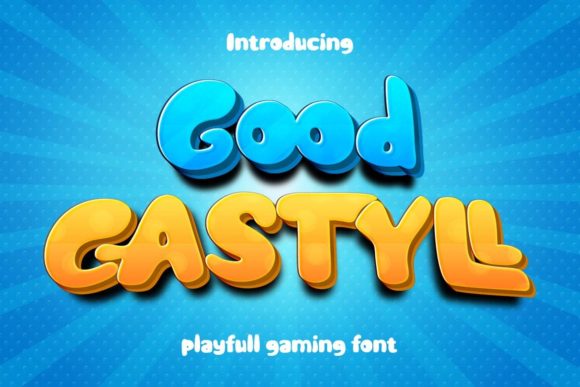
At its core, Good Castyll is designed to embody joy and authenticity. Unlike rigid geometric sans-serifs or overly ornate script fonts that can feel dated or difficult to read at small sizes, Good Castyll occupies a middle ground. It is a display font, meaning it is intended for headlines, titles, and large-scale text rather than body copy. Its design language is playful but not chaotic, offering a sense of structured fun that appeals to both children and the adults guiding them.
The distinctiveness of Good Castyll lies in its letterforms. The characters are constructed with rounded edges and varied stroke weights that mimic the natural irregularity of hand-drawn shapes without sacrificing digital precision. This creates a visual texture that feels human and accessible. When used in a classroom setting or on a craft activity sheet, the font immediately signals that the material is meant to be enjoyable, reducing the intimidation factor often associated with formal academic layouts.
- Visual Tone: Joyful, energetic, and authentic.
- Primary Use Case: Headlines, posters, and decorative elements.
- Target Audience: Children aged 3–12 and their educators/parents.
Comparing Good Castyll to Other Display Options
When researching typography for children’s activities, users often encounter several categories of fonts: standard sans-serifs (like Arial or Helvetica), whimsical scripts, and bold display fonts. Understanding where Good Castyll fits within this spectrum helps in making a more informed decision.
Standard Sans-Serifs vs. Playful Displays
Standard sans-serif fonts are the safest choice for readability. They are clean, neutral, and universally supported. However, they lack personality. A worksheet titled "Math Practice" in a standard sans-serif may feel like a chore to a child. Good Castyll, by contrast, adds an element of excitement. While it should not replace body text due to its stylistic nature, using it for headers transforms mundane tasks into engaging experiences. The tradeoff here is clarity versus character; Good Castyll sacrifices some neutrality for significant emotional impact.
Script Fonts and Legibility Concerns
Many designers reach for cursive or script fonts to convey playfulness. However, script fonts often suffer from low legibility, especially for young readers who are still developing their decoding skills. The connecting strokes and varying heights can confuse early readers. Good Castyll avoids this pitfall. It maintains the open structure of block letters while incorporating playful curves. This makes it superior to script fonts for educational materials where the text must be quickly and accurately read by children.
Geometric vs. Organic Shapes
Modern design trends often favor strict geometric shapes—perfect circles and uniform lines. While aesthetically pleasing, these can feel cold or corporate. Good Castyll leans toward organic, slightly irregular shapes. This "imperfect" quality aligns with the authentic, handmade feel of children’s art and crafts. It bridges the gap between digital design and physical creativity, making it a versatile tool for hybrid projects that involve both screen-based planning and paper-based execution.
Practical Applications and Best-Fit Scenarios
Determining whether Good Castyll is the right tool requires looking at specific use cases. It is not a one-size-fits-all solution, but it excels in environments where visual hierarchy and mood are paramount.
School Projects and Classroom Decor
In a classroom environment, first impressions matter. Good Castyll is ideal for bulletin boards, name tags, and project titles. Its bold presence ensures that text stands out even from a distance, which is crucial for younger students. Furthermore, its playful nature encourages students to take pride in their work. A science fair poster titled "Volcanoes" in Good Castyll looks inviting and adventurous, whereas a plain font might look like a dry report.
Activity Sheets and Worksheets
For printable resources, such as coloring pages, maze puzzles, or homework sheets, Good Castyll serves as an excellent header font. It breaks up the monotony of instructional text. By using Good Castyll for section titles (e.g., "Instructions," "Challenge," "Bonus"), creators can guide children through the page visually. This structural aid helps maintain focus and reduces cognitive load, allowing the child to concentrate on the task rather than deciphering the layout.
Children’s Branding and Merchandise
For businesses targeting families, such as toy companies, educational apps, or children’s clothing lines, Good Castyll offers a brand voice that is trustworthy yet fun. It communicates authenticity—a key value for modern parents who are skeptical of overly commercialized or artificial marketing. The font’s warmth suggests that the product was made with care, enhancing brand loyalty among caregivers.
Evaluating Tradeoffs and Limitations
No font is perfect, and Good Castyll comes with specific limitations that users must consider before integrating it into their workflow.
Readability at Small Sizes: As a display font, Good Castyll is not designed for long paragraphs of body text. At sizes below 14 points, the playful details may become muddy, reducing readability. Users should reserve Good Castyll for headings larger than 24 points and pair it with a highly legible sans-serif or serif font for body copy.
Overuse Risks: Because Good Castyll is visually loud, overusing it can lead to visual fatigue. A document entirely set in Good Castyll will feel overwhelming and difficult to scan. Effective design requires contrast. Pairing Good Castyll with simpler, cleaner fonts creates a balanced composition where the playful font draws attention to key information without dominating the entire page.
Contextual Appropriateness: While Good Castyll is fantastic for casual and educational contexts, it may not be suitable for formal communications. Letters to parents regarding serious matters, official school policies, or legal disclaimers should remain in neutral, professional typefaces. Using Good Castyll in these contexts can undermine the seriousness of the message.
Decision Factors for Designers and Educators
When evaluating Good Castyll against other options, consider the following decision factors:
- Brand Voice: Does your project aim to be fun, approachable, and energetic? If yes, Good Castyll aligns well. If the goal is authority or formality, look elsewhere.
- Target Age Group: For younger children (preschool to early elementary), the playful nature of Good Castyll is highly effective. For older teenagers, the font may appear too juvenile, and a more mature display font might be preferable.
- Medium of Distribution: Is the content primarily digital or print? Good Castyll performs well in both, but ensure that the resolution is high enough to capture its subtle curves in print.
- Pairing Potential: Consider how well Good Castyll pairs with other fonts you already own or have access to. It generally pairs well with clean sans-serifs, creating a dynamic contrast between headline and body text.
Conclusion: Is Good Castyll Right for You?
Good Castyll is a specialized tool in the typographic toolbox. It is not a replacement for standard reading fonts, nor is it a generic placeholder. Instead, it is a deliberate choice for designers and educators who want to inject joy and authenticity into their work. By understanding its strengths—its playful yet legible character—and its limitations—its unsuitability for body text—you can leverage Good Castyll to create materials that resonate with children and engage adults alike.
If you are looking to elevate a simple school project, make an activity sheet more inviting, or build a brand identity that feels genuine and fun, Good Castyll is a strong candidate. However, always prioritize readability and context. Use it strategically to highlight, not to clutter. In doing so, you honor the dual purpose of children’s materials: to educate effectively while inspiring delight.